When Should an AI Agent Ask Before It Acts? A Practical Guide to Approval Gates
An agent that can send emails or issue refunds holds the keys to the building. Two simple questions tell you which actions it can take alone and where a human should approve first.
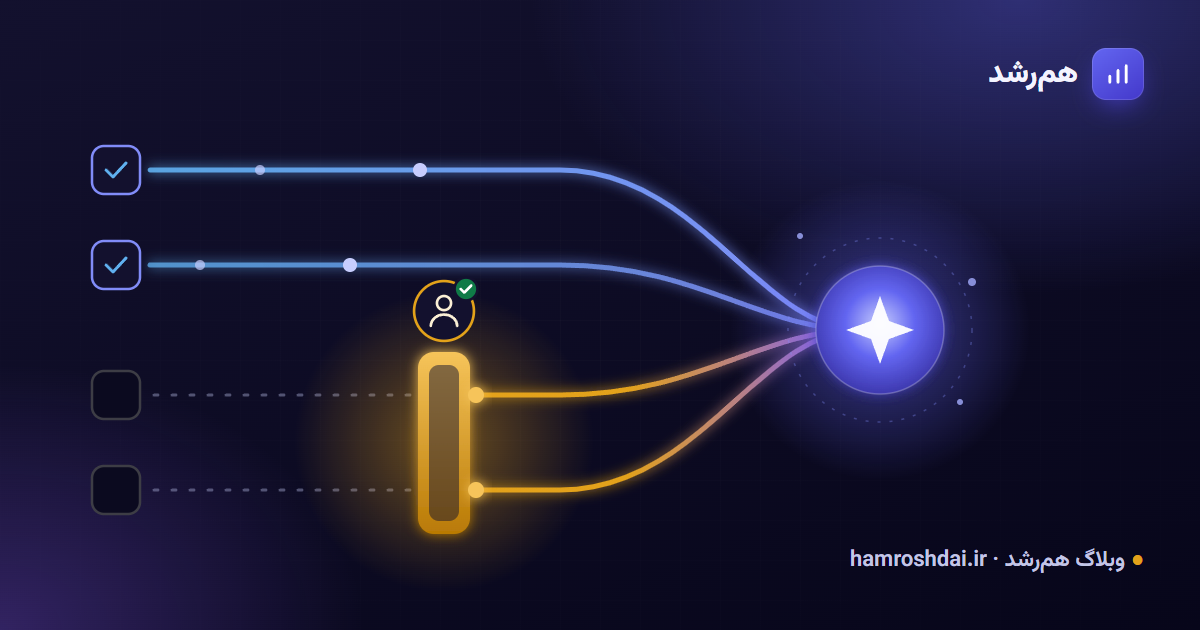
An AI agent that can only answer questions is a search box with good manners. The moment it can send an email, move a deal to "won", issue a refund or change who has access to a folder, it becomes a colleague with keys to the building. That is exactly why teams want agents, and also why many agent projects stall: nobody has decided which of those keys the agent should be allowed to turn on its own.
This guide is about that decision. Not "should we use agents?", but a narrower and more useful question: for each kind of action, should the agent act, act and tell someone, or stop and ask?
Full autonomy is the wrong goal
Much of the marketing around agents measures success by how little a human is involved. That framing causes trouble. In June 2025, Reuters reported a Gartner forecast that more than 40% of agentic AI projects will be canceled by the end of 2027, citing escalating costs and unclear business value. The same report described "agent washing", the relabelling of chatbots and assistants as agents, and estimated that only about 130 of the thousands of vendors in the space are real.
The same forecast also expects at least 15% of day-to-day work decisions to be made autonomously by agentic AI by 2028, up from 0% in 2024. Both numbers can be true at once. Agents will take over a growing slice of routine decisions, and projects that try to automate everything at once, without a clear idea of where judgement is needed, will be expensive and hard to trust.
The practical goal is therefore not maximum autonomy. It is the right amount of autonomy for each action, and a workflow in which the human steps are fast enough that people do not resent them.
The real risk has a name: excessive agency
Security people already have a precise term for what goes wrong. The OWASP Top 10 for LLM applications calls it Excessive Agency: the vulnerability that lets damaging actions happen in response to unexpected, ambiguous or manipulated output from a model, whatever the reason the model misbehaved.
OWASP traces it to three root causes:
Excessive functionality: the agent has tools it does not need, for example a "send email" tool attached to an agent that only summarises the inbox.
Excessive permissions: the tools reach further than necessary, such as a database connection that can delete when it only needs to read.
Excessive autonomy: high-impact actions run without anyone checking them first.
The useful insight here is that the model does not have to be "evil" or even wrong very often. A hallucinated customer ID, an ambiguous instruction, or a line of text hidden in an incoming email (a prompt injection) is enough. If the agent holds the keys, a small error becomes a real action.
A simple way to decide: reversibility and reach
You do not need a complex risk framework to start. Two questions sort most actions:
Can it be undone quickly and completely?
Who outside the current user will see or feel it?
Type of action | Examples | Sensible default |
|---|---|---|
Read only | Search documents, summarise a thread, draft an answer for the user | Act, and show which sources were used |
Reversible, internal | Tag a lead, update a task field, file a note | Act or ask once for a batch; keep a log and an easy undo |
Visible to others or hard to undo | Email a customer, change a deal stage, publish a page | Ask before each action, with a preview of exactly what will happen |
Money, contracts, people, access | Refunds, discounts, salary changes, permission changes | Route through the organisation's normal approval chain; sometimes two people |
Two details matter. First, the table describes defaults, not a fixed law; a team that has run an agent for months may move some actions one row up. Second, the bottom row is not an "AI rule". A junior employee cannot approve their own discount either. The agent should follow the same approval path a person would.
What a good approval request looks like
A human checkpoint only protects you if the person actually reads it. Approval prompts that say "The agent wants to perform 4 actions. Allow?" teach people to click "Allow" without thinking. The EU AI Act names this exact problem in its Article 14 on human oversight: the people overseeing a system must stay aware of automation bias, the tendency to over-rely on what the system produces.
A request that is worth approving shows:
What will change, as a concrete before/after, not a description of intent.
Why, with a link to the message, record or instruction that triggered it.
Who will be affected, especially anyone outside the team.
How to undo it, or a clear warning that it cannot be undone.
Batch the low-risk requests and keep the high-risk ones separate. If an approver sees forty requests a day, the important one will be approved with the other thirty-nine.
Guardrails that do not depend on the model behaving
Approval is one layer. The others should hold even if the model is confused or manipulated:
Least privilege. Give each agent only the tools and permissions its job needs. OWASP lists minimising extensions, their functionality and their permissions as the first lines of defence.
Act in the user's context. An agent working for a person should see and change only what that person can. It should never hold a broad service account that quietly bypasses permissions.
Enforce rules outside the model. OWASP calls this complete mediation: the system that receives the action checks whether it is allowed, instead of trusting the model's own judgement.
Log everything and limit rates. Logs and rate limits do not prevent mistakes, but they cap the damage and make it possible to understand what happened.
A real stop button. Article 14 asks that people be able to interrupt a high-risk system "through a 'stop' button or a similar procedure" that brings it to a safe halt.
Start simple. Anthropic's engineering guide Building effective agents recommends the simplest solution that works, stopping conditions such as a maximum number of steps, checkpoints where the agent can pause for human feedback, and extensive testing in sandboxed environments.
Where regulation is heading
Most business agents are not "high-risk systems" in the EU AI Act's legal sense, which covers areas such as employment decisions, credit scoring and education. Still, the Act's human-oversight article is a good checklist for anyone, because it describes abilities a supervisor should have: understand the system's limits, interpret its output correctly, decide not to use it, override or reverse its result, and stop it.
The timing has also shifted. The Digital Omnibus on AI, Regulation (EU) 2026/1744, entered into force on 27 July 2026 and moved the application date of the high-risk obligations for Annex III systems from 2 August 2026 to 2 December 2027, and for systems covered by Annex I to 2 August 2028. Teams building agents that touch hiring, lending or similar decisions now have more time, but the direction is clear: meaningful human oversight is becoming a design requirement, not a nice extra.
How Hamroshd handles it
Hamroshd takes the cautious end of this spectrum on purpose. Its agents can search, read and edit the workspace, but they ask for approval before each change. The assistant only sees what the person using it is allowed to see, and its answers show the pages it relied on. Requests such as a discount or a contract go through the Approvals module to the right approver, the same path a person's request would take.
That choice costs a few clicks. In return, a team can let an assistant do real work in sales, support and operations without wondering what it changed overnight. Whatever tools you use, the questions above are a good place to start: what can this agent touch, what can be undone, and who sees the request before it happens?
More practical guides are on the Hamroshd blog.
Sources
Reuters via The Star, 25 June 2025: Over 40% of agentic AI projects will be scrapped by 2027, Gartner says
OWASP GenAI Security Project: LLM06:2025 Excessive Agency
EU AI Act: Article 14, Human oversight
Anthropic, 19 December 2024: Building effective agents
Related articles
Gemini 4 Carbon Is Here: What an AI Built for Cyber Defense Means for Teams
Google gave Gemini 4 Carbon to cyber defenders first and opened it to all paying developers on 10 November. What its security numbers show, and how smaller teams can use it safely.
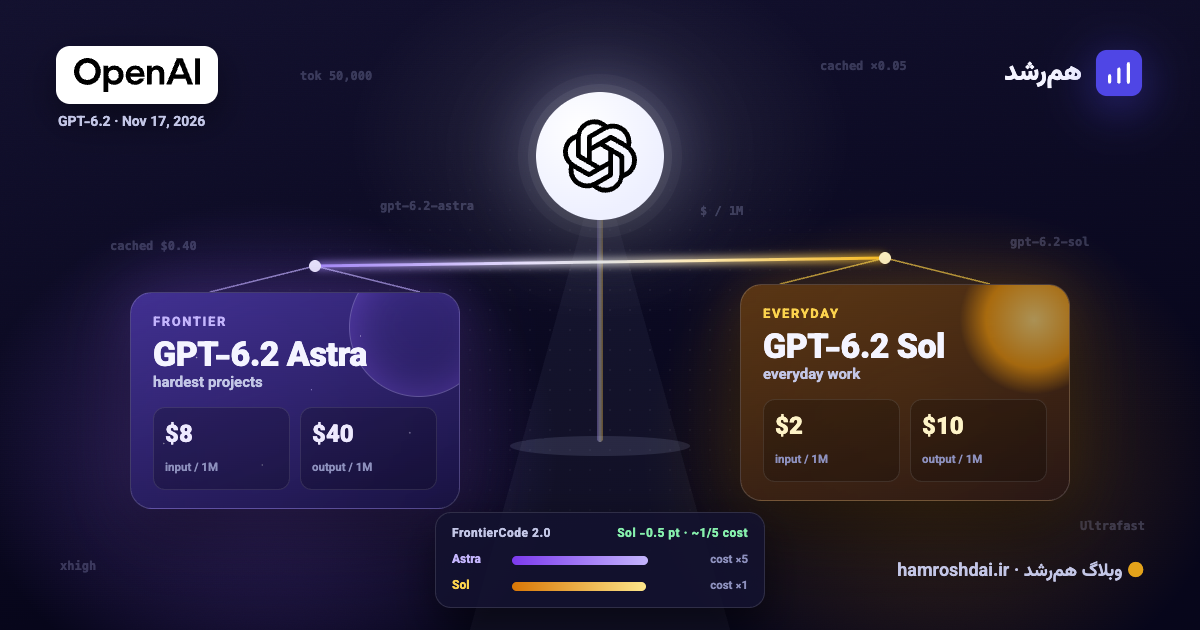
GPT-6.2 Astra or Sol? Which OpenAI Model Your Team Should Use for What
OpenAI's GPT-6.2 Astra and Sol are four times apart in price. Here are the prices, OpenAI's and independent benchmarks, early complaints and a practical routing plan.
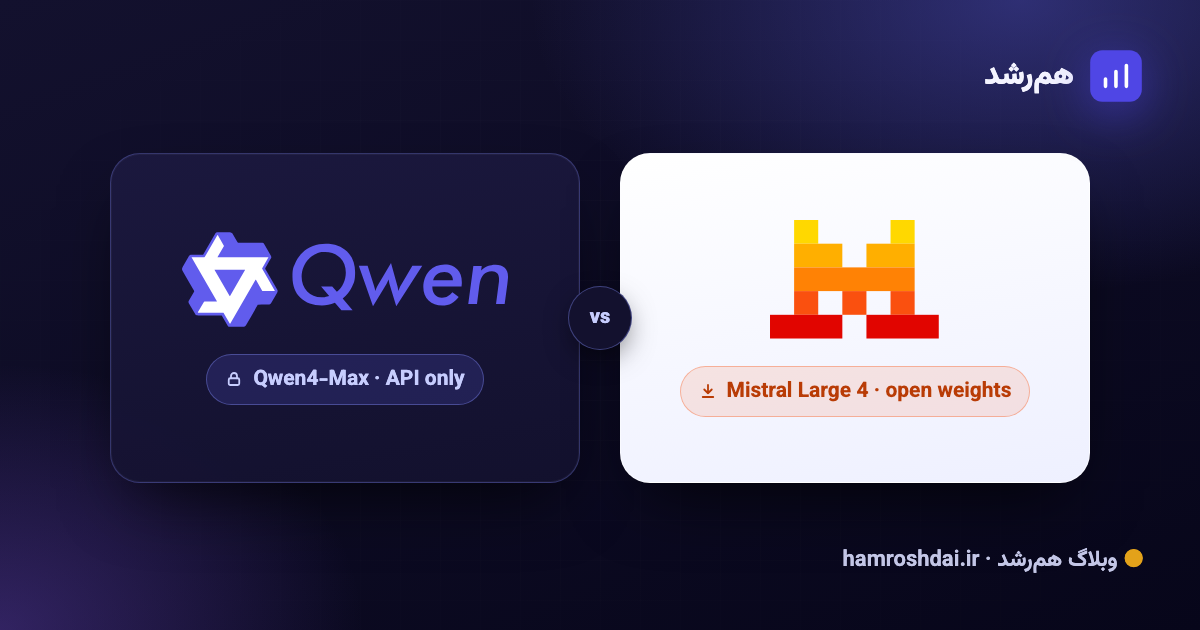
Qwen4-Max Is Here, but Closed: API Flagship or Open Weights Like Mistral Large 4?
Alibaba's Qwen4-Max brings 2.4 trillion parameters, a 1M-token context and cheaper API prices, but no downloadable weights. How it compares with the open-weight Mistral Large 4, and four questions for choosing.