GPT-6.2 Astra or Sol? Which OpenAI Model Your Team Should Use for What
OpenAI's GPT-6.2 Astra and Sol are four times apart in price. Here are the prices, OpenAI's and independent benchmarks, early complaints and a practical routing plan.
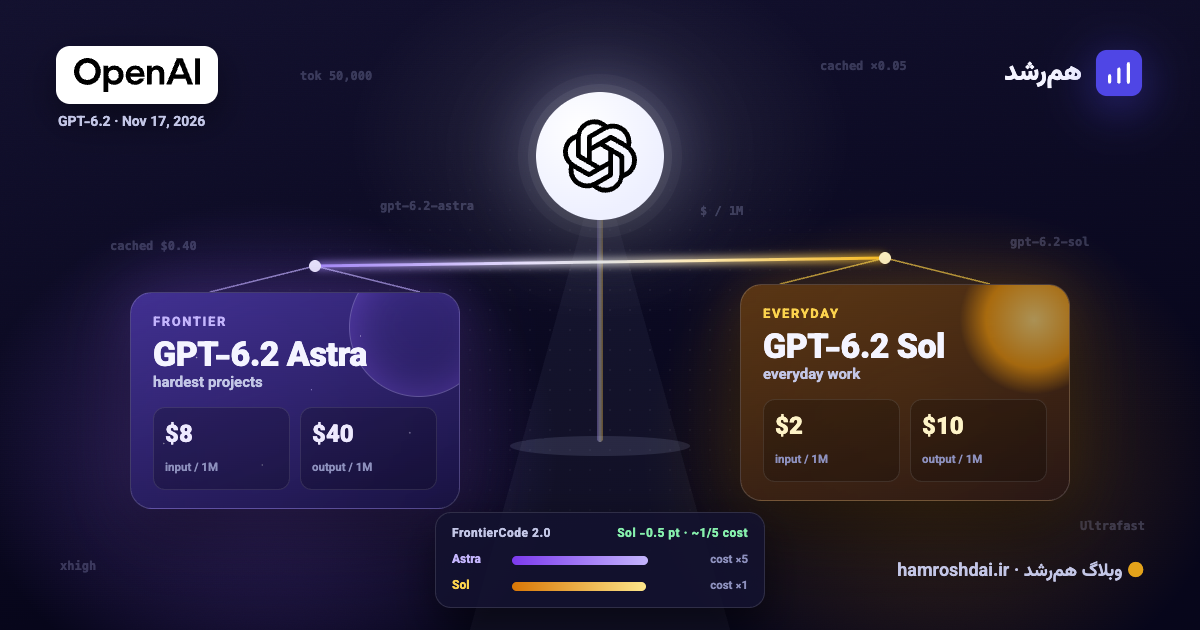
OpenAI released two models on November 17, 2026: GPT-6.2 Astra and GPT-6.2 Sol. Astra is the expensive frontier model; Sol is the cheap everyday one. The interesting part is not the launch itself but the gap between them. On some of OpenAI's own coding tests, Sol lands within half a point of Astra at roughly a fifth of the price. Independent testers, meanwhile, found that neither model moved much on coding at all.
So the useful question for a team is not "is GPT-6.2 good?" but "which jobs deserve Astra, and which should go to Sol?" This guide puts the official facts, the independent results and the early complaints side by side, then turns them into a routing plan.
What OpenAI actually released
According to OpenAI's announcement in its developer community, the two models have clear roles:
GPT-6.2 Astra: "a frontier model built for your hardest projects". OpenAI says it sets new highs on professional and scientific evaluations at less than a third of the cost per task of GPT-6 Astra.
GPT-6.2 Sol: "an efficient and versatile model for everyday work".
Both are available in ChatGPT Work and Codex for Plus, Pro, Enterprise and Edu users, and in the API as gpt-6.2-astra and gpt-6.2-sol. An OpenAI staff reply in the same thread clarifies that the rollout does not add either model to regular Chat, and that access depends on plan, workspace permissions and rollout progress. Faster "Ultrafast" serving is available in the API and for Pro 500 subscribers on both models; Pro 200 gets it starting with Sol.
Prices: a 4× gap that compounds
The list prices, per million tokens, as reported by The Decoder and Tech Monitor:
Input | Cached input | Output | |
|---|---|---|---|
GPT-6.2 Astra | $8.00 | $0.40 | $40.00 |
GPT-6.2 Sol | $2.00 | $0.10 | $10.00 |
Astra is 20% cheaper than GPT-6 Astra; Sol keeps GPT-6.1 Sol's pricing. Every line is a 4× difference, and that adds up fast in agent workflows.
A quick example: a support or code-review task that sends 50,000 input tokens and gets 5,000 tokens back costs about $0.60 on Astra ($0.40 + $0.20) and $0.15 on Sol ($0.10 + $0.05). Run that 2,000 times a month and the gap is about $900.
Two details matter more than the headline numbers:
Cached input is 95% cheaper. If your prompts start with the same long system instructions, documents or code context, keep that prefix stable so it can be cached. This can matter more than which model you pick.
Real tasks use more tokens than a price table suggests. Vals AI, testing at full reasoning effort, measured an average of $10.68 per task for Astra and $3.18 for Sol, making Sol the cheapest model in its top ten.
Benchmarks: OpenAI's numbers and the independent view
OpenAI's headline claims, as reported by The Decoder and the developer announcement:
Agents' Last Exam: Astra (at "xhigh" effort) scores 5.2 points above GPT-6 Astra.
GDPval-v2 (professional work tasks): Astra gains 6.2 percentage points over its predecessor while using 22% fewer output tokens.
FrontierCode 2.0 (merge-ready changes to real codebases, built by Cognition): Sol trails Astra by only 0.5 points at about one-fifth of the cost.
Independent evaluators were more mixed:
Artificial Analysis puts Astra at 62 on its Intelligence Index, second behind Claude Fable 5.2 at 65, with Sol at 57. On its Coding Agent Index, Astra was unchanged from GPT-6 Astra and Sol dropped 3 points from GPT-6.1 Sol, mainly due to a 14-point fall on a repository question-answering test.
Hallucination on Artificial Analysis's AA-Omniscience test, at maximum effort, was 59% for Astra and 55% for Sol.
Epoch AI scored Astra 174 on its Capabilities Index, tied with Claude Fable 5.2, but noted that Astra barely improved over GPT-6 Astra on real-world tasks.
Vals AI ranks Astra 7th and Sol 9th overall, with notable weak spots in legal research.
Early reports and safety notes
Android Authority collected early tester complaints: unproductive loops, tasks declared finished too early, and confusing answers despite strong benchmark results. OpenAI's Thibault Sottiaux responded that the company made substantial changes in the last three to four days before launch, which some reviewers missed, and that creative taste and ease of use are still being worked on. In the developer thread, several users also criticised the models' prose writing.
On safety, OpenAI says both models launch with tighter safeguards for higher-risk cybersecurity help. According to GCN, citing the system card, both meet the "Critical" threshold for cybersecurity in OpenAI's Preparedness Framework, and Astra is the first model OpenAI is deploying externally that meets the "High" threshold for AI self-improvement. The Decoder adds a detail from OpenAI's own alignment tests that matters for agents: the models more often failed to flag obstacles that were blocking their work.
Put together with "premature task completion", that is a clear signal: if you give either model tools and autonomy, keep human checkpoints on actions that matter. Our guide on when an AI agent should ask before acting covers how to set those up.
Astra or Sol: a routing plan for teams
A practical default: start every workload on Sol, and move a task to Astra only when you can show Sol fails it.
Task | Start with | Move to Astra when |
|---|---|---|
Drafting, summaries, translation, classification | Sol | Rarely; check writing quality on your own samples first |
Everyday coding, refactors, code review | Sol | Sol repeatedly fails your tests or misreads the repo |
Long multi-step agent work (research, analysis) | Sol for a pilot | The task needs many dependent steps and errors are costly |
Scientific, financial or engineering analysis | Astra | — |
Legal research | Neither by default | Only with expert review; both ranked low on Vals' legal tests |
To make that decision with data rather than impressions:
Build a small evaluation set. Collect 20 to 30 real tasks from your own work, with a clear definition of "accepted result".
Measure cost per accepted result, not cost per token. A cheaper model that needs two retries may cost more than Astra getting it right once.
Watch for the known failure modes. Check outputs for tasks marked "done" that are not, and for agents looping without progress.
Use caching. Keep the long, unchanging part of each prompt at the start and identical between calls.
Re-test in a few weeks. OpenAI has already said the models changed right before launch; behaviour may shift again.
In Hamroshd, workspace admins choose which AI models the workspace uses, and AI usage is counted in credits, so this kind of per-task routing maps directly onto how a team configures its AI employees and assistant.
The bottom line
GPT-6.2 Astra is a real step for hard professional and scientific work, at a lower price than its predecessor. But for most everyday team workloads, the more important news is Sol: close to Astra on several coding tests at a quarter of the list price. Independent testing shows coding progress has stalled for this release and hallucination remains high, so the sensible move is to default to Sol, prove where Astra earns its price, and keep humans in the loop for consequential actions.
For more analysis of AI models and developer tools, see the Hamroshd blog.
Sources
GPT-6.2 Astra and Sol are now available (OpenAI Developer Community, November 17, 2026)
OpenAI launches GPT-6.2 Astra and Sol with lower API prices and some benchmark gains (The Decoder, November 17, 2026)
OpenAI rolls out GPT-6.2 Astra and Sol models (Tech Monitor, November 18, 2026)
OpenAI launches GPT-6.2 Astra and Sol, but not everyone is sold on the cheaper upgrade (Android Authority, November 18, 2026)
OpenAI launches GPT-6.2 Astra and Sol AI models (GCN, November 19, 2026)
Image: OpenAI logo (symbol).svg) and OpenAI wordmark.svg), Wikimedia Commons (public domain); trademarks belong to OpenAI.
Related articles
Siri AI Opens to All Developers: Is Your App Ready for AI Assistants?
On 3 November Apple opened Siri AI to every app, though App Store releases wait until spring. How App Intents, entities and app skills work, and what product teams can do now.
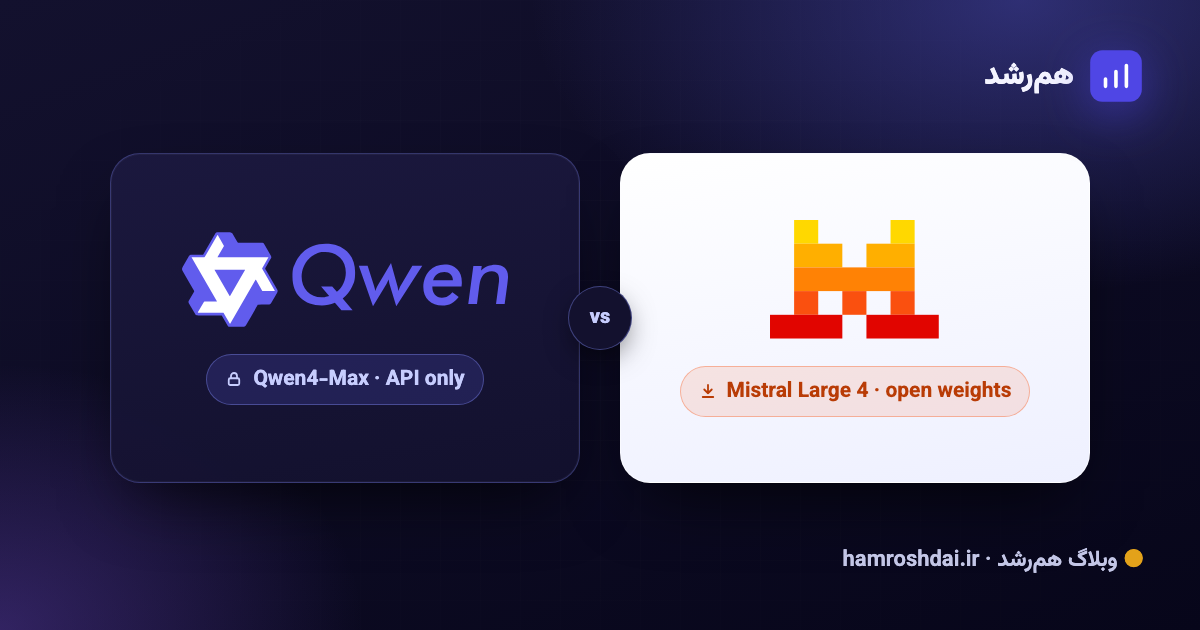
Qwen4-Max Is Here, but Closed: API Flagship or Open Weights Like Mistral Large 4?
Alibaba's Qwen4-Max brings 2.4 trillion parameters, a 1M-token context and cheaper API prices, but no downloadable weights. How it compares with the open-weight Mistral Large 4, and four questions for choosing.

Gemini 4 Carbon Is Here: What an AI Built for Cyber Defense Means for Teams
Google gave Gemini 4 Carbon to cyber defenders first and opened it to all paying developers on 10 November. What its security numbers show, and how smaller teams can use it safely.